

Why did you decide to participate in the Biomapas Academy?
The first time I heard about Biomapas Academy was from a friend who was already working in the pharmacy field. She sent me an advertisement for Biomapas Academy, which highly intrigued me. As I was in my last year of life science master studies, I wanted to discover my potential career possibilities and learn more about clinical trials. Therefore, without long thinking, I filled in the application form. I was very happy to be selected from quite many applicants and be invited to attend Biomapas Academy.

How was your experience during the three months?
We had four months of weekly lectures on different topics. They were related to the organization of clinical trials, regulatory affairs and pharmacovigilance of various medical products. Biomapas experts who resented the lectures even shared their personal experience and actual practical examples with us. We have been able to get acquainted with Biomapas company and its work specifics. Here we could expand our knowledge of the pharmaceutical industry.
How do you feel after graduating from the Academy?
I feel thrilled for taking a chance to participate in this unique project. After graduating from all the courses and tasks, I was absolutely honoured to be selected as the best student of Biomapas Academy 2020 and receive a scholarship. However, I mostly appreciate the valuable knowledge and experience I believe will be helpful for my future career. I think Biomapas Academy definitely contributes to the education of young professionals and is very useful, especially for those who want to get to know their professional opportunities better.

Biomapas Academy
What is Clinical Research? Regulatory Affairs? Pharmacovigilance?
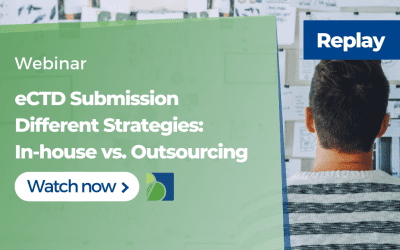
Webinar: eCTD Submission Strategies. In-house vs. Outsourcing
eCTD Submission Strategies, including outsourcing, are influenced by varying requirements in various regions and countries. That and diverse technical resources by companies often lead to various regulatory strategies. Thus, the questions arises: how to choose the...
3 Factors Affecting the Successful Collection of Drug Safety Information in Social Networking Sites
Health information that has been posted online by patients can efficiently supplement your post-marketing drug safety data gained from traditional sources. Data harvesting from Social Networking Sites (SNS) has a lot of potential and significant advantages when...
Drugs serialization and barcoding in Saudi Arabia and MENA region
An increasing number of countries worldwide have enacted regulations mandating serialization, tracking and tracing of pharmaceutical products down the supply chain during recent years as a response to drug integrity concerns. There are plenty of laws requiring...
eCTD implementation across MENA region: What is the current status?
As the electronic Common Technical Document (eCTD) became the standard for submitting Regulatory Information to leading agencies worldwide, its adoption still poses a considerable challenge for those agencies who lack the needed human and/or material resources. How is...

Building Health Literacy: The Value of Good Writing
Scientists, doctors, and health authorities often use written communication to present their research, opinions, or guidelines to the patients. While the questions they approach may be complex, the language should not. In medical documents, misinterpreted information may endanger the health and life of a patient. Thus, the main goal in medical writing is to convey the message clearly and concisely to avoid misinterpretation.
CMC: Down the road in effective IND/IMPD writing
In the previous two articles, we have shared our experience on various aspects of effective IND/IMPD CMC writing, considering proper planning, assigning a dedicated CMC writing team, and having effective project management. In addition, we discussed technical writing particulars giving some key messages on document preparation. Now, we will discuss other important points. These are safety, data completeness, and geographical regions.
European Union Funding/Europos Sajungos parama
In July 2020 Biomapas started an EU funded project of research and development activities by creating an artificial intelligence (AI) tool for pharmacovigilance services. The main aim of the project – to create a pharmacovigilance system based on artificial intelligence. Biomapas plans to commercialize the prototype of the technology created during the project in the form of a new pharmacovigilance service which will ensure continuous improvement of drug safety.

Proper Publicizing in CEECs – Path to Successful Social Media Commercials
With the growth of social media network users all over the world, there is no doubt that one of the most widely used channels for promoting is social media. Statistics show that Facebook and Instagram were used actively with more than 3.4 billion people daily by January 2020. Therefore, since medical devices and over-the-counter medicines are being more often promoted by commercials on social media nowadays, there is a greater risk of hidden or misleading advertisements.

How Mergers and Acquisitions of Pharma Companies affect Regulatory Affairs?
It is easy to notice that Mergers and Acquisitions (M&A) have become a frequent occurrence in the Pharmaceutical industry, especially during the previous decades. Pharma industry is one of the leading industries in the number of M&A and the size of investments for such transitions. The value for M&A in the pharmaceutical sector was $221 billion in the first half of the year 2015. In 2019, the worth of pharma companies M&A activities have reached $357 billion.
CMC: Best Practice in Effective IND and IMPD writing
This time we will focus on technical writing and preparation for it. Also, I will provide some primary recommendations for CMC writers. The IND/IMPD being a regulatory document, has the same structure as CTD dossier. However, it includes remarkably less information on the developmental product, yet, the technical writers should understand that they will need to prepare the document in the way to reflect the actual production process and control further during the development in the later clinical phases.