
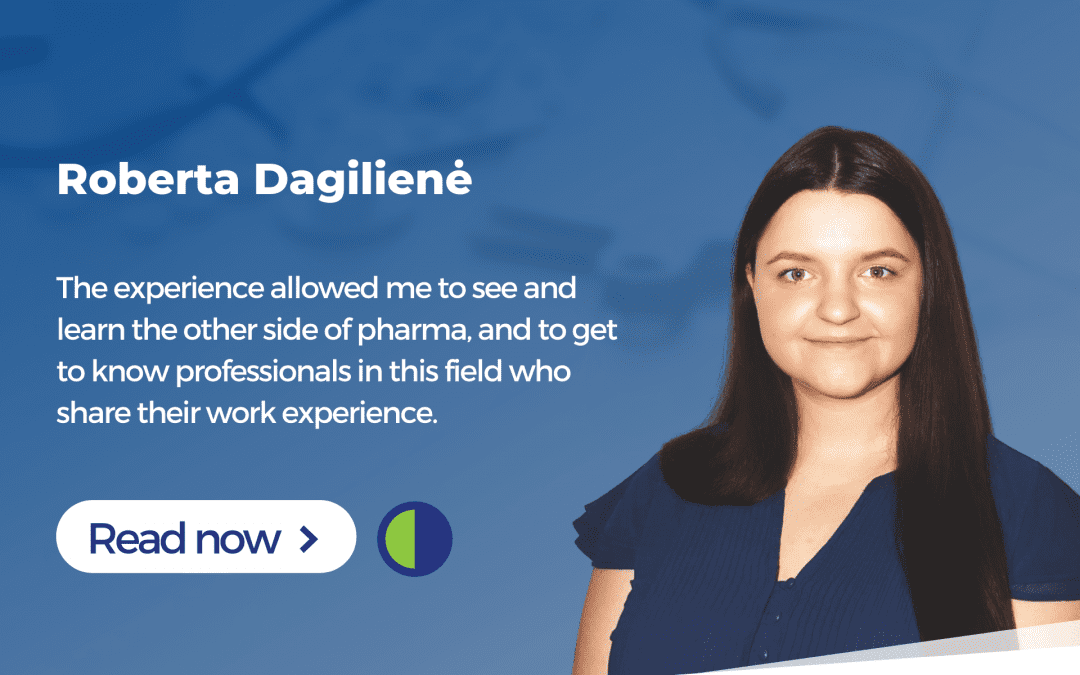
How did you decide to participate in the Biomapas Academy?
When I used to walk past a pharmacy every day, I could never stop dreaming about being able to help people and develop innovative pharmaceuticals. So while studying biomedical sciences, I became interested in the drug development paths, which led me to medicinal chemistry. And one day at the university, I saw a poster about the Biomapas Academy, which could help me understand what, how, where, and when happens to pharmaceutical products during the whole journey to reach us, so I signed up for it without hesitation. Even though I am usually not a lucky person, I was selected to be one of the participants, which surprised me!

How was your experience regarding the Academy?
During the few months, I deepened my existing knowledge of drug development stages and expanded it to learn more about drug regulation and pharmacovigilance. After graduating from the Academy, I got the opportunity to try out regulatory affairs as part of Biomapas – I completed a summer internship in the Regulatory Affairs department.
How do you feel after graduating from the Academy?
I will never forget this practice in my life, not only because it fulfilled what I was looking for, but it let me realize that I want to return to this company after my graduation and put my accumulated knowledge to use. Thanks again to all Biomapas staff for their insights and advice, and I hope to see you soon.

Biomapas Academy
What is Clinical Research? Regulatory Affairs? Pharmacovigilance?
Rx to OTC Switches – 5 Things You Need to Know before Considering a Switch
In the process of marketing authorization, competent authorities classify medicinal products as the subject or not-subject to medical prescription. However, the classification of medicinal products can be reevaluated and changed via a regulated procedure. When considering a switch, many factors like characteristics of market and population, local policies, advertising, confidence in regulatory authorities and other, influence the outcome. Though, the safety of patients has the highest priority. So, what questions should you ask?
Local Literature Surveillance Challenges and Specifics in the EU, CIS and LATAM regions
PV legislation introduced by the European Commission in 2012 and GVP guidelines together with local requirements committed each MAH to perform literature review in countries where their products are present. Compliance with mandatory requirements and guidelines is not always a simple task when local requirements and specifics come along. In this article, we will take a closer look at these challenges and specifics for local literature surveillance in different regions as EU, CIS and LATAM.

The CIS Region: Excellent Potential for Patient Recruitment but is there any Risk to Quality?
The number of clinical trials worldwide is increasing more than 10% each year due to the new diseases, further research for better health products and development of new drugs. Though, for a successful clinical trial, there is a major challenge – patient recruitment, which is essential and the most challenging factor due to the increasing number of new clinical trials. In order to achieve the required patient recruitment, sponsors are looking for different solutions.
The Predicted Impact of the ISO IDMP Standards Implementation Process Carried Out by the European Medicines Agency
The IDMP is a general term by which the 5 ISO data standards are referenced: ISO 11615 (regulated medicinal product information), ISO 11616 (regulated pharmaceutical product information), ISO 11238 (substances), ISO 11239 (pharmaceutical dose forms, units of presentation, routes of administration and packaging) and ISO 11240 (units of measurement). – which are being refined and implemented by regulatory bodies.
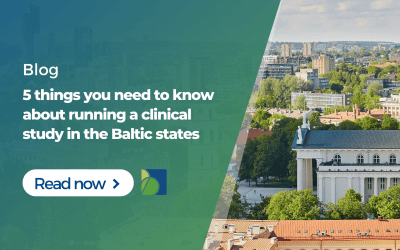
Running a clinical trial in the Baltic states
In the past five years, an average of 175 clinical trials are being initiated in the Baltic states each year. An average of 64,8% of the population in the Baltic states are in the age from 15 to 65 years old, the main target audience for clinical trials. Furthermore, a large pool of treatment-naïve subjects is available compared to other EU countries or the US. Patients with special therapeutic diseases are transferred to the main central hospitals.
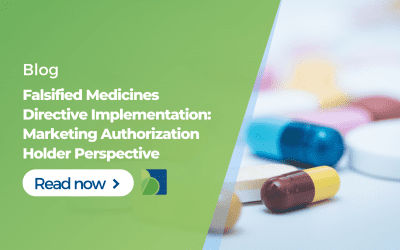
Falsified Medicines Directive Implementation – Marketing Authorization Holder Perspective
Falsified Medicines Directive (FMD) 2011/62/EU which aims to increase the security of manufacturing and delivery of medicines across Europe as well as protect patients and prevent falsified medicines from entering the supply chain has come in force Feb 9th, 2019. With the first quarter almost over, it is a great opportunity to look back and share the experience. The new requirements for safety features to appear on the packaging of all prescription medicines.

Biomapas appoints Chief Financial Officer
Filip Risteski was recently appointed as Chief Financial Officer (CFO) at Biomapas and will be one of the key players further strengthening continued growth of Biomapas. Filip will report directly to Audrius Sveikata, Biomapas Chief Executive Officer. As a CFO he will be responsible for placing control over finance function and financial strategy, by maximizing efficiency and ensuring highest quality standards. Furthermore, Filip will work with a management team on implementation of overall company business strategy.

Remaining Vigilant and Compliant after Brexit: What’s next? (Latest Updates)
On 29th March 2017 UK submitted the notification of its intention to withdraw from the EU. This means that UK will become a ‘third country’ from 30th March’19. Even though leaving the EU with a deal remains the Government’s top priority, UK drug agency is publishing a series of guidance documents for industry and other stakeholders covering the proposed arrangements for the regulation of medicines, medical devices and clinical trials, if UK leaves EU with no deal.
Implementation of ISO 9001 and 13485 standards: what does it bring to company and clients?
Compliance with high quality standards is a non-negotiable performance parameter in Pharmaceutical and Medical Device industries. During 2016, Biomapas was re-certified according to the newest ISO 9001 standard version. Moreover, at the beginning of 2017, ISO 13485 implementation into BIOMAPAS Quality Management System was initiated. We discussed the influence of current changes to the whole company and its quality management with Egidija Pauriene, MD, Quality Assurance Director.
Changing regulatory environment: eCTD submissions to become obligatory as of 2018
A new challenge is about to be faced by the MAHs of medicinal products. Since online tools are becoming a bigger part of our daily lives, the competent authorities are also moving forward step by step. 1st Jan 2018, the European Medicines Agency will require that all regulatory submissions for medicinal products authorized via Decentralized or Mutual Recognition Procedure will be provided in eCTD format.