
At the time, I had already finished my Bioengineering studies, but I was continuing them in the Medical Biology field. As for quite some time Biomapas has been stuck in my mind as a prestigious company in the life sciences industry, I would visit their website or social networks for the latest news from time to time.
This is also how I found out about the Biomapas Academy.
Why did you choose to become part of the Biomapas Academy?
Actually, it’s mostly because of one conversation that influenced my perspective towards career paths. I have a relative that has become a career consultant. So, at the end of my Medical Biology studies, I figured, why not have a conversation with her? And it turns out that the key takeaway for me was unexpected: I was not open-minded enough about the real-life application of my master’s degree. Now I can see that it was true, but at the time, it was a surprise. I thought that my degree would solely give me a license to work in clinical laboratories in hospitals, but that was not true.
I got convinced that it was time for me to broaden my horizons and look at all possible perspectives a life sciences background can bring. So, I could not resist applying to the Biomapas Academy when I saw the announcement.
What was the Biomapas Academy like?
It was great to see how well organized this educational project was and how much you could learn about the main three areas. The lecturers are real experts in their respective fields and share a lot of information. Furthermore, I was surprised by how eventful the field of drug safety can be – we do not see most of it in our daily lives.

What did you do after the Biomapas Academy?
Once I started going to the Academy, one thing led to another. I received an invitation to try myself out in the Pharmacovigilance department as an intern even before the end of the Academy itself. I didn’t doubt much about the offer as the pharmacovigilance field was the one that got my attention the most during the Academy course. You hear about clinical trials a bit more often than what happens after the products reach the market.
Halfway through my internship, the people management team reached out to me about an open position in the QPPV team. It was in an area that piqued my interest, so I decided to apply. After a few interviews, I got the great news that I got the position! The remaining few weeks of my internship were joyful, knowing that I would continue as an employee.
So, what is your role in Biomapas?
Currently, I am an assistant in the QPPV team, which operates in a wide range of various analytical tasks related to drug safety on a global scale. The acronym QPPV stands for a specific legally obliged person who is personally responsible for the pharmacovigilance process of a particular drug. The team I am part of is full of highly skilled and experienced QPPVs who have become my career mentors and advisors. It also means that this is the right team to be in if I want to become a QPPV myself one day.
Any wishes to the future participants?
If you keep considering what career path might be the best for you, I advise you not to doubt and apply to the Biomapas Academy. You will at least gain a broad understanding of how the drug development process works, and it’s a great addition to your resume. If you are lucky, this might become a much greater experience than just an interesting set of lectures and assignments – it could potentially lead your future career too, just like it happened to me.
From the moment I entered Biomapas, it has exceeded my expectations so far. Besides the ability to analyze medical information, I like that many other qualities are helpful in the job: from my natural proactivity to language skills. Even the sales background gained in several part-time jobs during studies reflects the versatile, client-oriented atmosphere here at work. So Biomapas is a place where all – my life science education, experience, personality, and skills – found a home, and Biomapas Academy was the project which led to finding that home.
We can never be sure of where life will bring us. And this is a fun, risk-free way to try the industry out and see if it’s the right fit for you.

Biomapas Academy
What is Clinical Research? Regulatory Affairs? Pharmacovigilance?
How the right CRO site network partnership accelerates clinical trials
Explore how these partnerships work in practice, why Sponsors in Europe increasingly prefer them, and the regulatory push behind the shift.
MENA PV Landscape – Key Updates & Inspection Trends
Timely insights on the evolving Pharmacovigilance landscape in the MENA region.

Navigating Pharmacovigilance Requirements in LATAM
Insights into the evolving Pharmacovigilance landscape across the LATAM region.
Centralized Pharmacovigilance: Ensuring Compliance and Efficiency Across Global Markets
This article explores the benefits of centralized pharmacovigilance outsourcing and the single-provider model.
Diversity in Clinical Trials: A European Perspective on Global Progress and Strategies
Discover insights on diversity in clinical trials, regulatory compliance to inclusion, the European approach, and trial design innovations.
Biomapas Welcomes David Passov as Chief Executive Officer
Press Release Biomapas Welcomes David Passov as Chief Executive OfficerWe are pleased to announce the appointment of David Passov, MBA, as our new Chief Executive Officer, effective 21st February 2025. David Passov brings extensive leadership experience in life...
How functional service provision (FSP) helps biotech companies streamline clinical trial operations
In recent years, biotech companies face pressure to optimize clinical trial operations while managing costs, ensuring regulatory compliance, and maintaining flexibility. This is where Functional Service Provision (FSP) comes in. FSP offeres a scalable, flexible...
Functional Service Provision As Smarter Approach to Clinical Trial Execution
For biotech and pharmaceutical companies, the challenge isn’t just innovation but execution too. Functional Service Provision (FSP) enables organizations to optimize clinical trials without the bottlenecks of traditional outsourcing. As competition intensifies and...
Pharmacovigilance Auditing: Understanding the Process and Maximizing Its Benefits
Discover how pharmacovigilance audits go beyond compliance to uncover hidden risks, drive improvement, and ensure every patient gets the safest treatment possible.
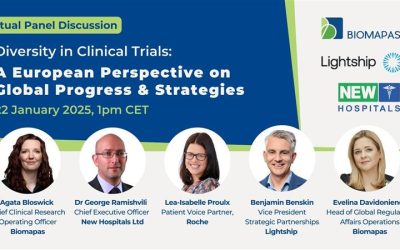
Diversity in Clinical Trials: A European Perspective on Global Progress and Strategies
In light of recent developments, we must recognise that diversity in clinical trials is not just a buzzword anymore, it is a key priority. Yet, with varying perspectives from regulatory agencies worldwide, and an industry still unaligned on the best approaches, there...