At the time, I had already finished my Bioengineering studies, but I was continuing them in the Medical Biology field. As for quite some time Biomapas has been stuck in my mind as a prestigious company in the life sciences industry, I would visit their website or social networks for the latest news from time to time.
This is also how I found out about the Biomapas Academy.
Why did you choose to become part of the Biomapas Academy?
Actually, it’s mostly because of one conversation that influenced my perspective towards career paths. I have a relative that has become a career consultant. So, at the end of my Medical Biology studies, I figured, why not have a conversation with her? And it turns out that the key takeaway for me was unexpected: I was not open-minded enough about the real-life application of my master’s degree. Now I can see that it was true, but at the time, it was a surprise. I thought that my degree would solely give me a license to work in clinical laboratories in hospitals, but that was not true.
I got convinced that it was time for me to broaden my horizons and look at all possible perspectives a life sciences background can bring. So, I could not resist applying to the Biomapas Academy when I saw the announcement.
What was the Biomapas Academy like?
It was great to see how well organized this educational project was and how much you could learn about the main three areas. The lecturers are real experts in their respective fields and share a lot of information. Furthermore, I was surprised by how eventful the field of drug safety can be – we do not see most of it in our daily lives.

What did you do after the Biomapas Academy?
Once I started going to the Academy, one thing led to another. I received an invitation to try myself out in the Pharmacovigilance department as an intern even before the end of the Academy itself. I didn’t doubt much about the offer as the pharmacovigilance field was the one that got my attention the most during the Academy course. You hear about clinical trials a bit more often than what happens after the products reach the market.
Halfway through my internship, the people management team reached out to me about an open position in the QPPV team. It was in an area that piqued my interest, so I decided to apply. After a few interviews, I got the great news that I got the position! The remaining few weeks of my internship were joyful, knowing that I would continue as an employee.
So, what is your role in Biomapas?
Currently, I am an assistant in the QPPV team, which operates in a wide range of various analytical tasks related to drug safety on a global scale. The acronym QPPV stands for a specific legally obliged person who is personally responsible for the pharmacovigilance process of a particular drug. The team I am part of is full of highly skilled and experienced QPPVs who have become my career mentors and advisors. It also means that this is the right team to be in if I want to become a QPPV myself one day.
Any wishes to the future participants?
If you keep considering what career path might be the best for you, I advise you not to doubt and apply to the Biomapas Academy. You will at least gain a broad understanding of how the drug development process works, and it’s a great addition to your resume. If you are lucky, this might become a much greater experience than just an interesting set of lectures and assignments – it could potentially lead your future career too, just like it happened to me.
From the moment I entered Biomapas, it has exceeded my expectations so far. Besides the ability to analyze medical information, I like that many other qualities are helpful in the job: from my natural proactivity to language skills. Even the sales background gained in several part-time jobs during studies reflects the versatile, client-oriented atmosphere here at work. So Biomapas is a place where all – my life science education, experience, personality, and skills – found a home, and Biomapas Academy was the project which led to finding that home.
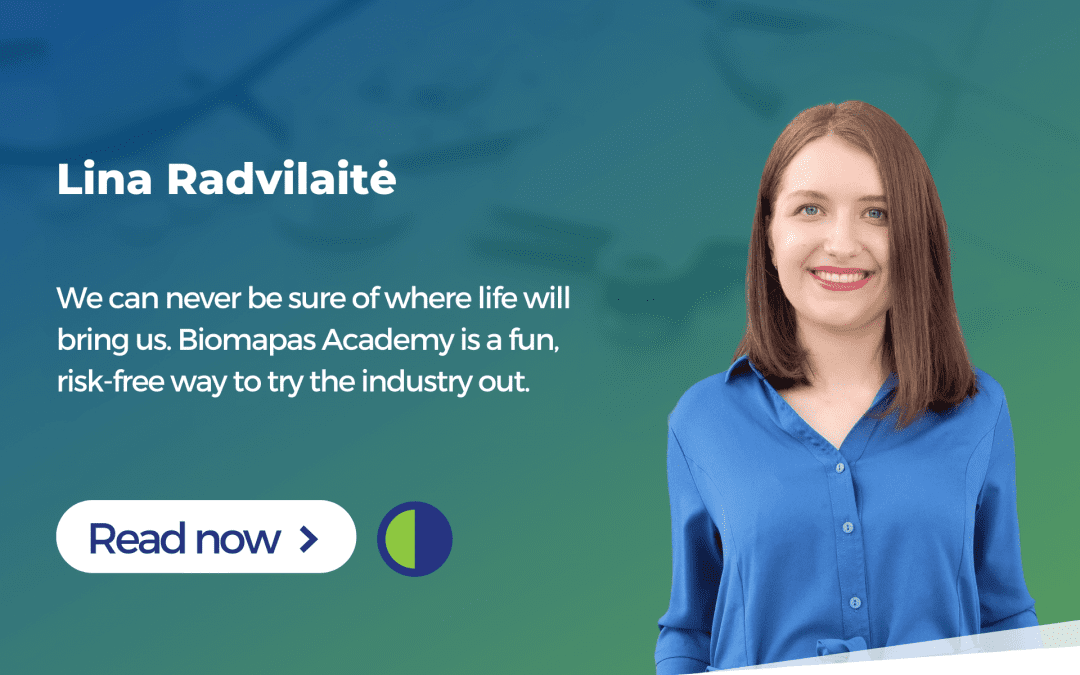
We can never be sure of where life will bring us. And this is a fun, risk-free way to try the industry out and see if it’s the right fit for you.

Biomapas Academy
What is Clinical Research? Regulatory Affairs? Pharmacovigilance?
Clinical Study Start-Up: Is there any Difference Between Western and Eastern Europe?
This article reviews Clinical Study Start-up Differences Between West & East Europe, timelines, and processes. Medicine is constantly evolving to invent effective ways to treat diseases. This progress is a never-ending process: the life science industry develops...
Expediting access through Reliance Pathways: MENA region
Reliance models are review pathways used by Regulators to expedite the patient access to essential pharmaceutical products and to overcome resource constraints and priorities. Recently, several National Competent Authorities (NCA) in the Middle East North Africa (MENA) region have implemented the Abridged and Verification reviews. These regulatory procedures allow the approvement of needed innovative and/or life-saving drugs.
Webinar: eCTD Submission Strategies. In-house vs. Outsourcing
eCTD Submission Strategies, including outsourcing, are influenced by varying requirements in various regions and countries. That and diverse technical resources by companies often lead to various regulatory strategies. Thus, the questions arises: how to choose the...
3 Factors Affecting the Successful Collection of Drug Safety Information in Social Networking Sites
Health information that has been posted online by patients can efficiently supplement your post-marketing drug safety data gained from traditional sources. Data harvesting from Social Networking Sites (SNS) has a lot of potential and significant advantages when...
Drugs serialization and barcoding in Saudi Arabia and MENA region
An increasing number of countries worldwide have enacted regulations mandating serialization, tracking and tracing of pharmaceutical products down the supply chain during recent years as a response to drug integrity concerns. There are plenty of laws requiring...
eCTD implementation across MENA region: What is the current status?
As the electronic Common Technical Document (eCTD) became the standard for submitting Regulatory Information to leading agencies worldwide, its adoption still poses a considerable challenge for those agencies who lack the needed human and/or material resources. How is...
Building Health Literacy: The Value of Good Writing
Scientists, doctors, and health authorities often use written communication to present their research, opinions, or guidelines to the patients. While the questions they approach may be complex, the language should not. In medical documents, misinterpreted information may endanger the health and life of a patient. Thus, the main goal in medical writing is to convey the message clearly and concisely to avoid misinterpretation.
CMC: Down the road in effective IND/IMPD writing
In the previous two articles, we have shared our experience on various aspects of effective IND/IMPD CMC writing, considering proper planning, assigning a dedicated CMC writing team, and having effective project management. In addition, we discussed technical writing particulars giving some key messages on document preparation. Now, we will discuss other important points. These are safety, data completeness, and geographical regions.
European Union Funding/Europos Sajungos parama
In July 2020 Biomapas started an EU funded project of research and development activities by creating an artificial intelligence (AI) tool for pharmacovigilance services. The main aim of the project – to create a pharmacovigilance system based on artificial intelligence. Biomapas plans to commercialize the prototype of the technology created during the project in the form of a new pharmacovigilance service which will ensure continuous improvement of drug safety.
Proper Publicizing in CEECs – Path to Successful Social Media Commercials
With the growth of social media network users all over the world, there is no doubt that one of the most widely used channels for promoting is social media. Statistics show that Facebook and Instagram were used actively with more than 3.4 billion people daily by January 2020. Therefore, since medical devices and over-the-counter medicines are being more often promoted by commercials on social media nowadays, there is a greater risk of hidden or misleading advertisements.