Medical information is often seen as a support or compliance function. In reality, it can provide something far more valuable: direct insight into how products are understood, used, and questioned in real-world settings.
When inquiries from all the external stakeholders are captured and analyzed consistently, they reveal patterns that can support pharmacovigilance, inform medical and educational strategy, and improve decision-making across the organization.
This article explores how medical information insights can create strategic value for pharma and biotech companies.
Medical information insights as a direct channel to patients and healthcare professionals
Medical Information is a regulatory requirement in many markets, including the European Union. In Europe, Article 98 of Directive 2001/83/EC requires each marketing authorization holder to establish a scientific service responsible for information on the medicinal products it places on the market. The broader regulatory framework also emphasizes the importance of providing neutral, objective, and comprehensible information on medicinal products. This reinforces the role of Medical Information as a structured and trusted scientific exchange point within the healthcare ecosystem.
However, the value of Medical Information goes much further: it provides a unique structured channel where organizations interact directly with healthcare professionals, patients, caregivers and others.
Unlike clinical or commercial data, these interactions are spontaneous and initiated by the end user. They are driven by real questions, uncertainties, and real-world product use. As a result, the nature of the data and the insights generated changes over time.
Each inquiry highlights a specific need:
- A healthcare professional seeking clarification on dosing or safety
- A patient reporting an unexpected experience
- A caregiver asking how to manage treatment in practice
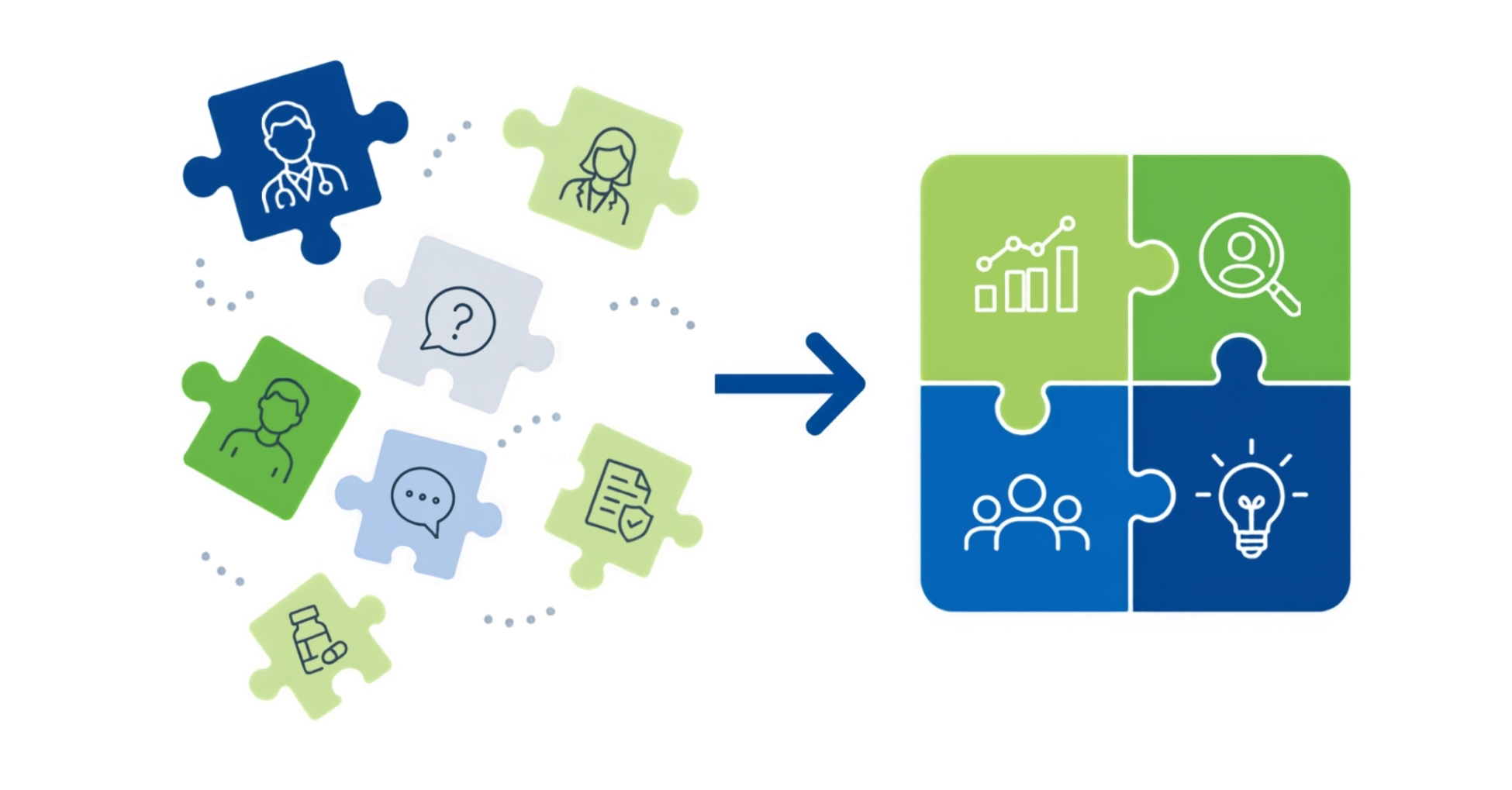
Taken alone, these interactions may seem like isolated events that provide limited information. But when aggregated, they become medical insights that reveal patterns in how a product is used and understood and can point to meaningful actions. This creates a level of visibility that is difficult to obtain elsewhere. Clinical trials operate within controlled environments. Commercial teams rely on planned interactions. Medical information captures unfiltered real-world input.
When structured properly, this allows organizations to identify:
- Recurring knowledge gaps among HCPs
- Areas where patient understanding is limited
- Emerging trends in product usage across regions
They may also reveal opportunities to refine product presentation and related materials to enhance the overall user experience, as well as identify potential therapeutic expansion opportunities based on insights gathered from off-label use inquiries.
For decision-makers, this could also work as a continuous stream of market intelligence, directly tied to product performance in practice.
Strengthening pharmacovigilance through medical information insights
Medical Information is one of the several channels through which adverse events or product quality concerns may be received and reported, but its contribution extends beyond individual case handling.
Medical Information insights can support broader safety processes by adding context to the information received through routine interactions with requestors. When these interactions are captured and reviewed collectively, they can reveal recurring safety-related questions, product-use concerns, or trends that may require closer attention.
For example, repeated inquiries about a specific adverse event or confusion around product administration may highlight areas where additional communication, clarification, or support is needed. Viewed in isolation, these interactions may seem limited. But when documented consistently and analyzed over time, they can contribute to a broader understanding of recurring themes.
A reliable Medical Information database is essential in making this possible. When inquiries are recorded in a structured and standardized way, organizations can move beyond isolated case handling and identify patterns that might otherwise remain hidden. This helps ensure that relevant information is not lost between the initial contact and further evaluation and ultimately improves patient outcomes.
Medical information insights that inform medical strategy and education
Repeated questions from healthcare professionals and patients can reveal where understanding is limited and where additional support is needed. For medical affairs teams, this provides valuable input for shaping strategy.
When the same topics come up consistently, it can indicate a need to:
- Update to scientific communication
- Refineme of key messaging
- Develop of targeted educational materials
For example, repeated questions about administration or dosing may indicate that existing materials are too complex or not aligned with clinical practice.
Medical information insights also support better alignment between global and local teams. Questions coming from specific regions can highlight differences in clinical practice, regulatory expectations, or cultural understanding. Over time, this creates a feedback loop in which real-world questions are captured, insights are analyzed, trends are monitored and medical strategy is refined accordingly.
Why fragmented medical information limits the value of insights
In many organizations, each country or region handles Medical Information differently, with different systems, formats, and reporting approaches. This fragmentation reduces the value of Medical Information insights when they remain local, making it difficult to identify patterns across markets due to the lack of consistent and comparable data.
The solution is simple: a unified medical information setup.
As a single source of truth, the Medical Information database is necessary to capture inquiries consistently across multiple regions, improving visibility across teams, enabling efficient retrieval of information, and turning routine interactions into analyzable data. Without that foundation, valuable patterns may remain hidden within country’s individual inquiries and never develop into usable insights.
When inquiries are captured in the same way across regions, you can analyze them at a scale. You can see if the same question appears in multiple countries. You can identify whether an issue is local or global. You can act faster. But most importantly, this process reduces risk.
Standardization also improves oversight, consistency, and increases the company’s reputation and visibility. Also, it supports more reliable handling of safety-related information and therefore facilitates collaboration with pharmacovigilance and quality teams.
For leadership, this means moving from scattered data to usable medical information insights, where structured systems allow not just answering questions, but understanding what those questions indicate.
Conclusion: Turning medical information insights into a strategic asset
Medical information insights show how a product is used and understood in real-world settings. They support safety, highlight knowledge gaps, and inform medical strategy.
Coming back to our point: medical information should not be viewed solely as an operational output or a regulatory requirement. Companies should invest in structured, reliable, and compliant medical information systems, as these provide the foundation for capturing consistent data and generating insights that can create far greater business value than medical information is often credited for.
So, the question is no longer whether Medical Information questions are answered. It is whether your company is using a unified and reliable Medical Information system that can convert those interactions into insights, reveal trends, and create value across the organization.