
Cancer is the biggest cause of mortality globally, with 19.3 million new cases and over 10 million deaths expected in 2020. By 2040, the worldwide cancer burden is predicted to reach 28.4 million cases. Female breast cancer is the most often diagnosed type of cancer, followed by lung, colorectal, prostate, and stomach cancers. By enrolling in clinical trials, patients can gain early access to potentially life-saving medicines and help bring innovative treatments to more patients in the future. Even though the COVID-19 pandemic has interrupted many clinical trials, including cancer trials, the clinical demand is substantial. Moreover, clinical studies are resuming their normal pace following the introduction of several mitigating measures. Of course, there are ample hurdles in Clinical Development and this articles addresses the Challenges In Early Phase Oncology Trials
Patient concerns
Various patient-related misunderstandings and impediments might surround early-stage clinical trials. After overcoming the initial barrier of educating a patient about the possibility of participating in a study, other obstacles arise.
To begin, some patients may be fearful of being prescribed a medication with a short track record or a placebo. Others may skip early phase studies out of concern that their health may deteriorate or that they would experience adverse consequences. On the other hand, oncology medicines that get to early phase clinical trials have been evaluated in vivo or earlier studies, ensuring that patient safety is prioritized. You must adequately advise each patient about the advantages and hazards of enrollment in an early phase clinical study. The entire team will require sufficient time and resources to discuss study details with prospective patients.
Patients frequently raise similar questions during cancer studies at BIO1 as they do in other clinical trials:
- Is the experimental product considered to be safe?
- What if the medication is ineffective?
- Or if it results in adverse events that necessitate the trial’s termination?
- How frequently are study visits scheduled?
- What other procedures will be carried out throughout the trial?
- What therapy alternatives are available upon withdrawal from the trial? Will I be allowed to continue therapy if a beneficial outcome occurs?
Our skilful investigator-oncologists provide adequate time and effort to address any potential subject inquiries and ease any worries or concerns.
Logistic inconveniences
Participating in any clinical study, particularly an early phase clinical trial, may impose logistical burdens on participants.
Travel to the clinical trial location, many visits, rigorous schedules, painful procedure scheduling, and overnight stays might feel like an extra hardship, particularly for oncologic patients.
Patients may be unaware of payment options such as travel fees, meals, and even money for their time. Therefore, we advise sponsors to factor this into their clinical trial budget planning and ensure that everything these aspects are covered in advance.
We develop and submit to regulatory authorities a supplementary Agreement on Subject Reimbursement in addition to the Informed Consent Form at our early phase unit BIO1. This Agreement has a thorough pay plan, including reimbursement for time worked, travel, food, and contraceptive expenditures and reimbursement for other applicable expenses.
Thus, we hope to alleviate any needless concerns for the patient, allowing them to set logistical concerns aside and consider the potential advantages to their health when deciding whether to participate.
Slow recruitment
There are a variety of probable explanations for sluggish enrollment in early phase cancer studies. However, Phase I research’s most often cited reasons include safety concerns, design difficulties, and tight eligibility requirements.
To guarantee that you accomplish your trial’s objectives, you must address several factors while designing the study, including establishing the enrollment criteria, arranging the appropriate dosage escalation schedule, and developing the safety management strategy. However, a phase I site and study staff can assist the Sponsor in meeting enrolment timelines in the following ways:
- Allow sufficient time to inform patients and family members prior to the informed consent procedure. Then, let patients to take written patient information home with them.
- Reduce logistical difficulties for patients by compensating them for any out-of-pocket expenditures and time spent during clinical trial visits;
- Assure a quiet atmosphere – it’s enormously beneficial to conduct a clinical study in a designated phase 1 unit away from hundreds of other patients, particularly for oncological patients who are exhausted from recurrent hospital visits. Patients at BIO1, report that they frequently experience relaxation during their visits.
- Ensure that you keep the administrative load on investigators to a minimum. An investigator is more motivated and eager to enrol another clinical trial subject if their primary focus is on the patient’s medical treatment instead of administrative chores. You can easily delegate these mundane tasks to other experienced team members.
- You can contact and exchange information with colleagues or patient advocacy organizations. By increasing knowledge of the ongoing clinical study, you can increase the likelihood of direct referrals.
Administrative processes
Cumbersome administrative procedures and staffing requirements (research nurses, supporting staff) can severely hamper early phase studies.
A site must have adequate people, equipment, and facilities to participate in an early phase study. Early phase studies frequently involve many treatments not included in regular therapy (intensive pharmacokinetics sampling, multiple ECGs, vital signs monitoring, repeated imaging tests, etc.).
As a result, clinical trial staff must be well trained and capable of devoting their full attention and time to the study’s conduct. The site may become swamped with administrative tasks, resulting in poor recruiting. At our BIO1 Early Phase Unit, we have specialized personnel to assist scientists with administrative chores, allowing them to concentrate on subject recruitment and medical care. Experiential study coordinators and study nurses manage all study-related duties, including the following:
- study procedures (vitals signs, electrocardiograms, blood and urine sampling, also multiple samples for pharmacokinetics);
- entries into eCRF;
- investigational product accountability;
- preparation and dosing;
- temperature monitoring;
- visit tracking;
- and many other tasks.
Surrogate Endpoints
Any oncological medication is intended to prolong patients’ overall survival or to improve their quality of life. Overall survival is a straightforward metric to evaluate and understand as the primary endpoint in many late-phase cancer clinical studies. Often, progression-free survival serves as a surrogate endpoint for effectiveness, not just in phase III studies but also in phase II trials.
Biomarker-driven surrogate endpoints can be incorporated prospectively in early-phase oncology clinical trials to assess the mechanism of action and biological response to immune-oncological therapies. In addition, surrogate endpoints can be quantified considerably sooner, allowing for the following:
- Shorter follow up time;
- A smaller sample size;
- Reduced overall costs;
- And accelerated approval of your drug.
However, it would be best if you used surrogate endpoints with caution. Surrogate endpoints may not necessarily reflect the efficacy of the drug with regard to actual outcomes. Therefore inappropriate decisions for future development phases can be made, resulting in failed trials. The solution is to effectively use surrogate endpoints and a high level of expertise at the early stages of a new oncology drug development.
References
- Sung, H, Ferlay, J, Siegel, RL, Laversanne, M, Soerjomataram, I, Jemal, A, Bray, F. Global cancer statistics 2020: GLOBOCAN estimates of incidence and mortality worldwide for 36 cancers in 185 countries. CA Cancer J Clin. 2021: 71: 209- 249. https://doi.org/10.3322/caac.21660
- Holly A. Massett, Grace Mishkin, Larry Rubinstein, S. Percy Ivy, Andrea Denicoff, Elizabeth Godwin, Kate DiPiazza, Jennifer Bolognese, James A. Zwiebel and Jeffrey S. Abrams. Challenges Facing Early Phase Trials Sponsored by the National Cancer Institute: An Analysis of Corrective Action Plans to Improve Accrual. Clin Cancer Res November 15 2016 (22) (22) 5408-5416; DOI: 10.1158/1078-0432.CCR-16-0338
When Do Biotech Companies and Startups Need Pharmacovigilance
Many biotech startups assume pharmacovigilance begins after approval, but regulatory expectations and clinical trial complexity often require safety oversight much earlier. Learn when pharmacovigilance becomes essential and how to stay compliant as you scale.
How to Build Clinical Safety for Biotechs Without a Full Department
Discover how biotech companies can build scalable clinical safety management early, ensuring compliance, oversight, and efficient operations across development phases.
Clinical Safety Management in Pharma: How to Manage Risk Across the Drug Development Lifecycle
Learn how effective clinical trial safety management supports risk mitigation, regulatory compliance, and patient safety across all stages of drug development.
Biomapas Insights: Clinical Site Selection for Early Phase Oncology Studies
Expert perspectives on where to begin, how to choose the right clinical sites, and what to consider when selecting an eCRF/EDC system for early-phase oncology studies.
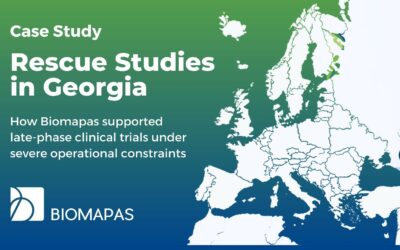
Case Study: Specialised Rescue Studies in Georgia
Discover how we successfully supported late‑phase clinical trials in Georgia by overcoming operational constraints, accelerating study start‑up, and restoring delivery confidence in complex research environments. This case study highlights three real‑world success...

Biomapas Insights: From Hope to Global Impact – How Elpida Accelerated Gene Therapy for Rare Diseases
In this Biomapas Insights episode, Martijn van de Leur, Chief Commercial Officer, speaks with Terry Pirovolakis, CEO of Elpida Therapeutics, the organisation that grew out of the CureSPG50 advocacy movement. Together, they explore how a parent-led mission to help...

Biomapas Insights: Selecting the Right CRO at the right time – What Biotechs Need to Know
Expert insights on timing, selection criteria, and early-phase clinical trial strategy for choosing the right CRO in biotech development.

Running Pan‑European Multi‑Regional Trials with Flexible FSP Models
Discover how flexible FSP models help sponsors run multi-country clinical trials across Europe with greater control, speed, and regional alignment.

Enhancing Patient Recruitment in Niche Markets Through Clinical Trial Outsourcing
Explore clinical trial outsourcing and its role in overcoming recruitment challenges in clinical research for small biotech companies.
Site Startup Services in Clinical Trials: Leveraging Local Expertise
Learn how integrating site startup services within a flexible FSP model accelerates activation in CIS and CEE, reduces contract cycles, and improves predictability from first submission to first patient in.