By Phase I, you have invested years of research, significant capital, and considerable organizational effort. The next step is to generate human safety data to advance your program. Effective clinical safety oversight and medical monitoring in early development, help sponsors protect participants, meet regulatory expectations, and make informed decisions throughout the study.
Many biotech companies outsource clinical safety and medical monitoring activities, particularly in early development. The challenge is not finding a provider, but finding one that supports your program, protects patient safety, meets regulatory expectations, and helps prevent delays that could affect timelines, budgets, and investor confidence.
A strong clinical safety partner does more than process adverse events. They help interpret emerging safety data, support key development decisions, ensure regulatory compliance, and reduce operational risk throughout the study.
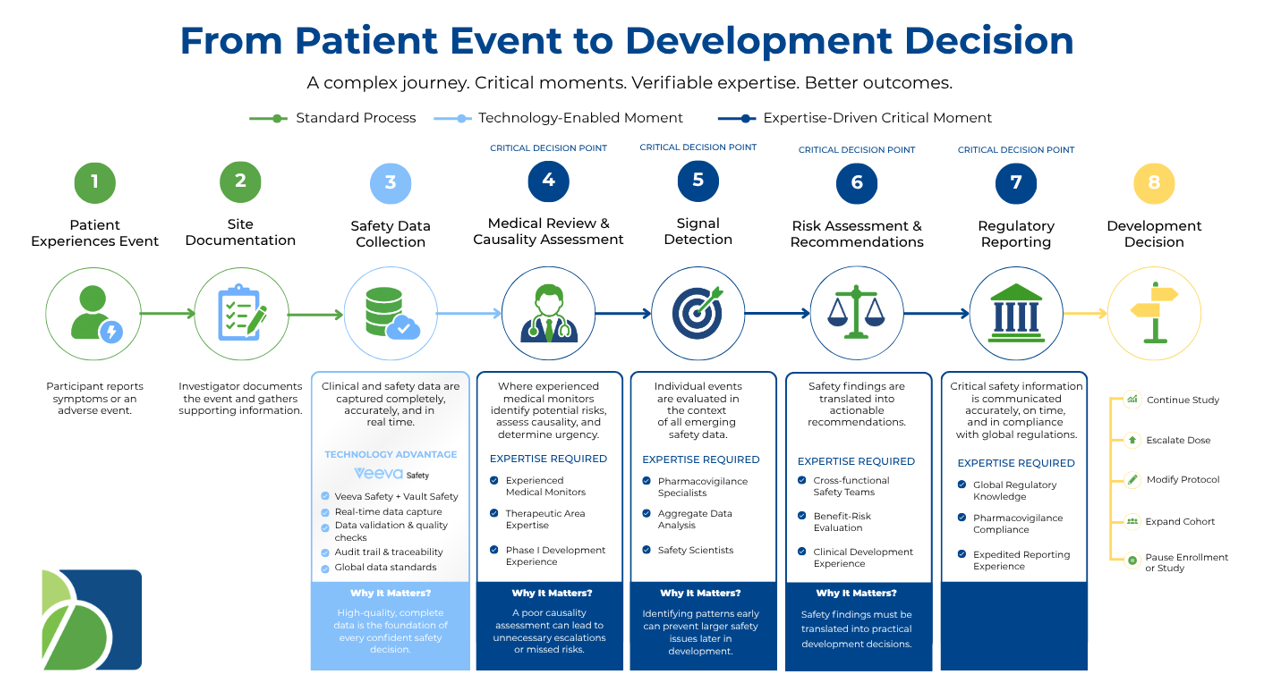
Figure 1. While safety data follows a defined process, critical moments within that process require specialized technology, clinical expertise, and regulatory knowledge to support informed development decisions.
What Does a Clinical Safety Service Provider Do?
Clinical safety service providers support sponsors throughout the safety management process during a clinical trial. Depending on the scope of outsourcing, their responsibilities may include:
- Safety physician oversight with Dose limiting toxicity monitoring
- Adverse Event (AE) / Serious Adverse Event (SAE) or pregnancy reports management
- Expedited and routine reporting of safety data to regulatory agencies
- Signal detection and risk assessment
- Safety database management and maintenance
- Support for safety review committees and DSMBs/IDMCs
- 24/7 safety coverage
Phase I studies require intensive safety monitoring. Safety data must often be reviewed quickly, especially during dose escalation and first-in-human studies. Providers may conduct real-time safety assessments, communicate with investigators, and interact with regulatory authorities.
Clinical Safety Activities Throughout a Phase I Trial
| Before First Patient | During Trial | Safety Review | Regulatory Reporting |
| Safety Management Plan | SAE Collection | Medical Review | Expedited Reporting |
| SAE Reconciliation Plan | Safety Data Review | Signal Detection | Health Authority Communication |
| Safety Database Configuration | Case Processing | Aggregate Safety Review | Safety Updates |
| DSMB Planning | Investigator Support | Dose Escalation Decisions | Compliance Oversight |
Providers vary in their level of support. Some focus on case processing, while others offer strategic medical oversight and comprehensive safety management.
1. Evaluate Their Phase I Experience
Not all experience is equally relevant; for example, a provider experienced in large post-marketing pharmacovigilance programs may not be the best fit for first-in-human studies, where safety decisions must be made quickly and often with limited data.
Look for providers with experience supporting:
- First-in-human studies
- Single ascending dose (SAD) trials
- Multiple ascending dose (MAD) trials
- Healthy volunteer studies
- Early oncology studies
- Cell and gene therapy programs, if applicable
Ask for examples of studies similar to yours. More importantly, ask how they handled unexpected safety findings, dose escalation decisions, or protocol modifications. Those answers will often tell you more than a capabilities presentation ever will.
2. Assess Regulatory and Quality Expertise
You should consider regulatory compliance as a minimum requirement, not a differentiator. Even when safety activities are outsourced, your company remains responsible for ensuring compliance. Regulators will hold the sponsor accountable, not the vendor.
A strong provider should demonstrate expertise in:
- FDA requirements
- EMA requirements
- ICH guidelines
- Good Clinical Practice (GCP)
- Good Pharmacovigilance Practices (GVP) where needed
You should also evaluate the maturity of their quality management system.
Questions worth asking include:
- Have they successfully undergone sponsor audits?
- What quality metrics do they track?
- How are CAPAs managed and monitored?
- How often are SOPs reviewed and updated?
The strongest providers are able to explain not only what their processes are, but why those processes exist and how they reduce risk for sponsors.
3. Review Medical Monitoring Capabilities
In Phase I, safety data is often reviewed in near real time. The quality of medical oversight directly affects dose escalation decisions, protocol modifications, and regulatory interactions.
Evaluating the team’s expertise is as important as assessing the process itself.
When assessing a provider, consider:
- Availability of dedicated medical monitors
- FIH trials management expertise
- Therapeutic area expertise
- 24/7 coverage capabilities
- Participation in Safety Review Committees
- Experience supporting DSMBs
The qualifications of the medical team often matter more than organizational size. A smaller team with experienced physicians and strong clinical judgment may offer greater value than a larger organization with limited senior involvement.
4. Examine Technology & Safety Systems
Clinical safety depends on timely access to accurate data. The provider’s safety database and technology infrastructure should enable efficient decision-making, regulatory reporting, and long-term scalability.
Evaluate:
- Safety database capabilities
- Compliance with 21 CFR Part 11 and EU Annex 11
- Audit trail functionality
- Data backup and disaster recovery procedures
- Integration with EDC and clinical systems
- Reporting and dashboard capabilities
Technology should streamline safety oversight, not add complexity. Assess how quickly a provider can generate safety reports, respond to regulatory requests, and support inspections when required.
5. Consider Partnership & Scalability
Many biotech companies focus only on the immediate study when selecting a safety provider. It is better to consider where your program may be in two, three, or five years.
Changing providers during development introduces operational risk, added cost, and unnecessary complexity. The best partnerships are established with future growth in mind.
Consider whether the provider can support:
- Future clinical phases
- Additional countries and regions
- Increased case volumes
- Expanded pharmacovigilance requirements
Communication is equally important. Look for a provider that offers:
- Clear governance structures
- Regular reporting
- Defined escalation pathways
- Proactive recommendations
- Transparent performance metrics
The best providers do more than execute tasks. They help sponsors anticipate and address challenges before they become problems.
Red Flags to Watch For
Certain warning signs should prompt additional investigation. Be cautious of providers that:
- Have limited Phase I experience
- Cannot provide relevant references
- Have high staff turnover
- Lack dedicated medical resources
- Struggle to explain quality procedures
- Offer vague service-level commitments
- Use outdated or poorly integrated systems
Cost alone should not drive your decision. A lower-cost provider that causes delays, compliance issues, or operational inefficiencies can ultimately increase overall development costs.
Questions to Ask During Vendor Selection
Before making a decision, every sponsor should ask:
- Do you have experience with Phase I studies similar to ours – can you provide a show case?
- What therapeutic areas are your strongest?
- What are your timelines and what is you prioritization process for SAEs management?
- What medical monitoring resources are available?
- How do you identify and manage safety signals?
- What quality metrics do you track?
- How do you support sponsors during regulatory inspections?
- Can your services scale as our program grows?
- What makes your approach different from other providers?
The answers to these questions often reveal more about a provider’s capabilities than any proposal document.
Conclusion
Every milestone that follows Phase I depends on the quality of the safety data generated during this stage. Regulators will review it. Investors will scrutinize it. Potential partners and acquirers will examine it during due diligence.
The best providers bring expertise, oversight, and guidance that help you navigate one of the highest-risk stages of drug development with greater confidence. When evaluating potential partners, focus on experience, quality, medical expertise, technology, and long-term fit. The right choice can help your team move faster, reduce risk, and build a stronger foundation for the next phase of development.
If you are preparing for a Phase I study and looking for support with clinical safety, pharmacovigilance, medical monitoring, or broader clinical development activities, the team at Biomapas can help. With experience supporting biotech and pharmaceutical companies across multiple therapeutic areas and regions, Biomapas provides the expertise and operational support needed to help sponsors advance their programs with confidence.