Clinical safety outsourcing helps biotech companies manage growing safety responsibilities without building a full clinical safety department.
In early biotech clinical trials, safety activities are often handled by a combination of internal teams, CROs, and pharmacovigilance services. As studies become larger and more complex, however, sponsors often need additional expertise, systems, and oversight to maintain effective clinical safety management.
This article explores when clinical safety outsourcing makes sense, which activities are commonly outsourced, and how biotech companies can maintain control while scaling their clinical development programs.
What Is Clinical Safety Outsourcing?
Clinical safety outsourcing is the use of external specialists, processes, and technology to support safety reporting and management during drug development in clinical trial settings.
For biotech companies, this typically involves outsourcing operational safety activities and the safety database while maintaining oversight and regulatory responsibility. Depending on the study’s complexity and stage of development, outsourced services may include serious adverse event (SAE) and pregnancy report management, medical review, safety database access and maintenance, aggregate safety reporting, and other pharmacovigilance services.
What clinical safety management is not:
- It is not a way to shift sponsor’s obligations to external providers. Sponsors remain accountable for patient safety and compliance, and regulatory authorities such as the EMA and FDA continue to assign key responsibilities to the sponsor and require sponsor oversight. Effective governance and monitoring remain essential when working with outsourced clinical safety teams.
- It is not necessarily the same as building a full internal clinical safety department. Organizations can leverage experienced safety professionals, established processes, and validated systems through external support models.
In the long run, this approach is especially valuable for growing biotech companies, as clinical trial safety requirements often expand faster than internal resources.
Is it worth building a Full Clinical Safety Department?
Most biotech companies begin clinical development without a dedicated clinical safety department. As studies become larger and more complex, sponsors must decide whether to build an internal safety function or outsource clinical safety activities.
A useful way to evaluate that decision is to ask:
- Are adverse event volumes increasing beyond what current teams can comfortably manage?
- Are you running studies across multiple countries or regions with different regulatory requirements?
- Do you need access to experienced safety physicians, medical reviewers, or pharmacovigilance specialists?
- Are you preparing for later-stage trials that require more robust safety oversight and governance?
- Do you have validated systems, documented processes, and quality controls in place for safety operations?
- Can your organization support the ongoing cost of hiring, training, and retaining a dedicated safety team?
If several of these challenges apply, building an internal clinical safety department may require substantial investment in people, processes, and technology.
What Does Building an Internal Clinical Safety Function Actually Require?
Clinical safety management involves more than hiring a safety physician or pharmacovigilance specialist. Effective safety oversight requires coordination between multiple functions, including clinical operations, medical monitoring, pharmacovigilance, data management, regulatory affairs, and quality assurance.
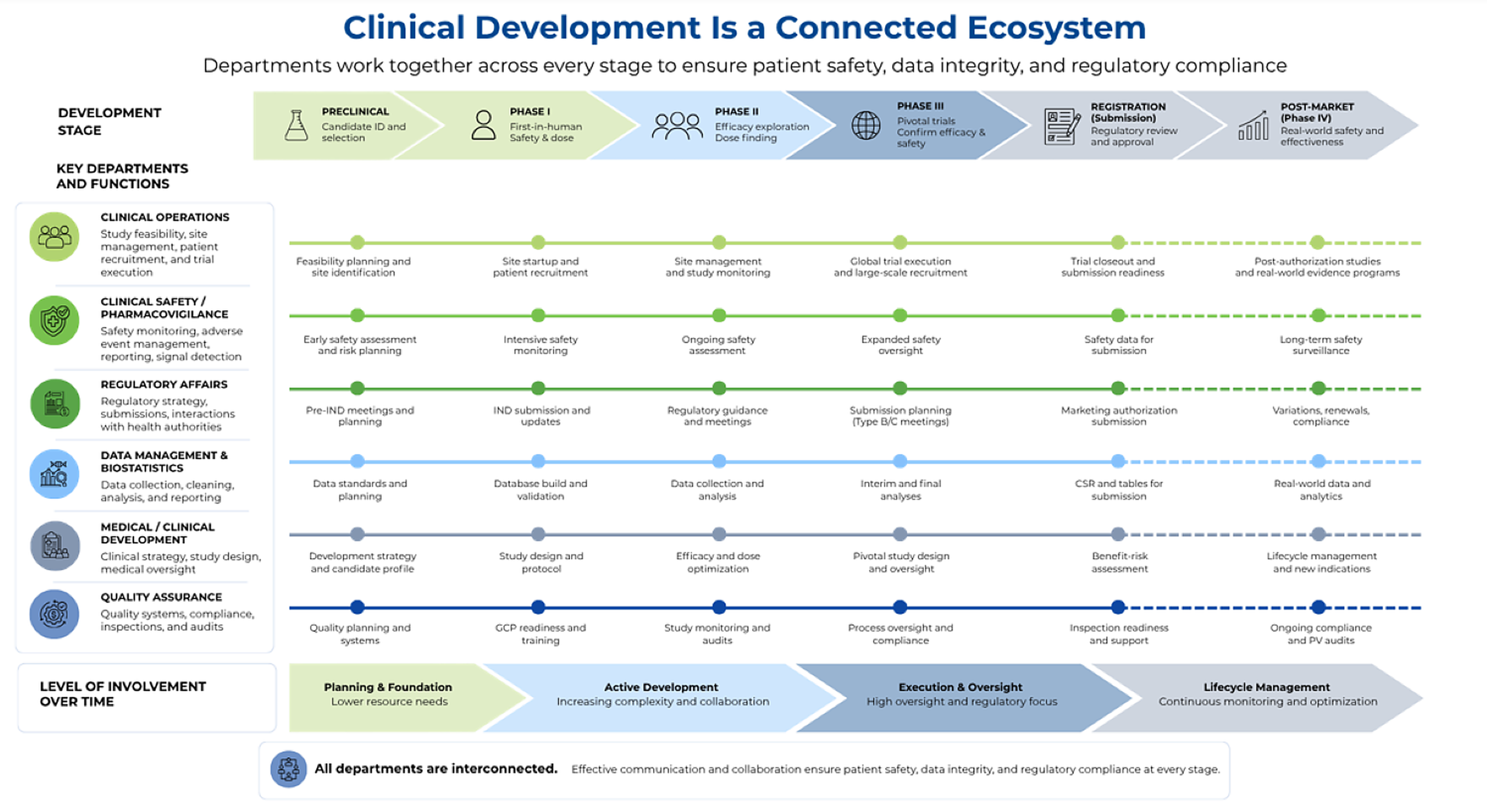
Figure 1. Key functions involved in clinical safety management across clinical development.
Depending on the stage of development, this may include:
- Clinical safety physicians and medical reviewers
- Pharmacovigilance specialists
- Safety database infrastructure
- Standard operating procedures (SOPs)
- Quality management and oversight processes
- Regulatory reporting systems and workflows set up
- Vendor management and governance activities
- Inspection readiness and documentation controls
For larger pharmaceutical companies, these investments are often justified by the size of their portfolio. For many biotech companies, however, building this infrastructure internally can be difficult to justify while studies are still evolving and resource needs continue to change.
Which Clinical Safety Activities Are Commonly Outsourced?
Clinical safety outsourcing does not need to be an all-or-nothing approach. Many biotech companies outsource specific activities while retaining overall safety oversight internally.
The most commonly outsourced functions include adverse event /serious adverse event (SAE) processing, safety database management, medical review support, aggregate safety reporting, and regulatory safety submissions. More specialized activities, such as signal detection and benefit-risk evaluations, may be shared between internal teams and external providers, depending on the company’s resources and stage of development.
| Clinical Safety Function | Commonly Outsourced |
| SAE processing | Yes |
| Safety database management | Yes |
| Regulatory safety reporting | Yes |
| Aggregate reporting | Yes |
| Medical review support | Yes or Shared (with Medical oversight of safety reporting assessment by sponsor) |
| Signal detection support | Often |
| Safety strategy and governance | Shared |
| Sponsor oversight | No |
While operational activities can be delegated, sponsors remain responsible for ensuring appropriate oversight, compliance, and patient safety throughout the clinical development program.
How to Stay in Control During Clinical Safety Outsourcing?
As mentioned at the beginning of this article, a common misconception is that outsourcing clinical safety means transferring responsibility. In reality, regulatory authorities continue to hold sponsors accountable for patient safety, regardless of which activities are outsourced.
Successful clinical safety outsourcing relies on clear governance and defined responsibilities between the sponsor and the service provider. Sponsors should maintain visibility into safety activities through regular review meetings, performance metrics, documented processes, and clearly defined escalation pathways.
This approach allows biotech companies to access specialized expertise and scalable support while retaining control over safety decisions, regulatory compliance, and overall study oversight.
Ultimately, the goal of clinical safety outsourcing is not to replace sponsor oversight. Instead, it is designed to strengthen oversight by providing additional resources, specialized expertise, and greater operational capacity.
Conclusion
Clinical safety outsourcing allows biotech companies to access the expertise, systems, and operational support needed to manage growing safety responsibilities without immediately building a full internal department.
While sponsors remain responsible for patient safety and regulatory compliance, outsourcing can provide a practical way to scale clinical safety management as trials become larger, more complex, and increasingly global. By combining strong oversight with external expertise, biotech companies can build a clinical safety framework that supports both current development needs and future growth.