

In the last few years, a major breakthrough in cancer research has occurred: early phase oncology trials. This type of trial is designed to test whether a new drug has any adverse effects on people and also provides anecdotal evidence that it might be efficacious. This blog post will discuss the evolving process of early phase oncology trials and how they may change in the future.
The History of Early Phase Oncology Trials
The field of oncology has undergone a major transformation over the last few decades. One of the most significant changes has been how early phase oncology trials are conducted. In the past, these trials were often designed as large, randomized Phase III trials. However, recent years have shifted towards smaller, more targeted Phase I and II trials.
There are several reasons for this change:
- A greater understanding of the significance of molecular targets in cancer treatment. This has led to the development of more targeted therapies that are more likely to be effective in earlier stages of the disease.
- The costs of conducting large clinical trials have increased dramatically, making it difficult to justify their expense.
- The success rates of Phase III trials have decreased over time, while the success rates of smaller Phase I and II trials have remained relatively stable.
This shift towards smaller early phase oncology trials is likely to continue in the future. As our understanding of cancer improves, we can develop more targeted and effective treatments that we can test in smaller trials. This will ultimately lead to better outcomes for patients with cancer.
What is an Early Phase Oncology Trial?
An early phase oncology trial is a clinical study that tests the effectiveness of new cancer treatments in humans. These studies are essential for developing new treatments and improving the care of cancer patients. Early phase trials are typically small, with a limited number of participants. They are often the first step in testing a new treatment before it is given to a larger group of people in later phase trials.
Why are Early Phase Trials Evolving?
The development of targeted therapies and immunotherapies has led to a new era in cancer treatment. As a result, early phase oncology trials are evolving to keep up with these advancements.
Targeted therapies are designed to target specific molecules involved in the growth and spread of cancer cells. This allows for more precise and effective treatment with fewer side effects. On the other hand, immunotherapies work by harnessing the immune system’s power to attack cancer cells.
Both of these approaches show great promise in the fight against cancer. As a result, early phase oncology trials are evolving to test these new treatments.
- One major change is that trials are now testing combinations of different therapies. This is because targeted therapies and immunotherapies often work best when used together. Researchers can find the most effective treatments for each patient by testing combinations of therapies.
- Another change is that we conduct most clinical trials across multiple centres. This allows increased patient enrolment in trials, which is vital for finding effective treatments.
- Finally, trials are now using new technologies to collect data. This data is then used to improve the design of future trials.
How are Early Phase Oncology Trials Evolving?
The field of oncology is constantly evolving, and early phase oncology trials are no exception. These trials are essential for testing new treatments and therapies for cancer, and they have already undergone many changes in recent years.
The future of early phase oncology trials is looking very promising. The main goal of these trials is to find new and effective treatments for cancer and to do so in a way that is efficient and minimizes the risk to patients. Many new technologies and approaches are being developed that show great promise in helping to achieve these goals. Here are some of the ways we predict that early phase oncology trials will evolve:
1. More focus on precision medicine
One of the biggest trends in oncology right now is precision medicine, which involves tailoring treatments to a patient’s tumor. This approach is being increasingly used in early phase trials, as it can help to improve efficacy and safety.
2. Greater use of immunotherapy
Immunotherapy, which harnesses the immune system’s power to fight cancer, is another area that is seeing more attention in early phase trials. This is because immunotherapy has shown great promise in treating a variety of different cancers.
3. More use of biomarkers
Biomarkers are used more frequently in early-phase oncology trials to select patients who are most likely to respond to a particular treatment. It helps to improve the chances of success for these trials. Using biomarkers to select patients for clinical trials will help ensure that only those most likely to benefit from a particular treatment enrol in the trial. This can help improve the trial’s chances of success and reduce the number of patients exposed to potentially harmful treatments.
4. More patient-centric trial designs
A growing trend toward designing trials puts the patient at the centre of care. This concept is referred to as “personalized medicine” (or “individualized therapy”), and it involves tailoring treatment to a patient’s unique genetic makeup, tumour characteristics, and medical history.
5. More trial designs that involve biomarkers
Biomarker-guided trials are another emerging trend in early phase oncology research. Such trials are designed to determine whether certain treatments work better than others on particular types of tumours and cell lines containing specific genetic alterations.
6. Novel delivery methods for drugs
Another promising area of research is using novel delivery methods for cancer drugs. This includes using nanoparticles or other targeted delivery systems to target cancer cells without harming healthy cells. This approach can help improve treatments’ efficacy while minimizing side effects.
Many other exciting developments are taking place in the field of early phase oncology trials, and it is an exciting time to be involved in this field of research. We will likely see many more breakthroughs in the years to come, ultimately benefiting.
Selecting a CRO for an early phase oncology trial
The early phase of oncology trials is crucial in developing new cancer treatments. However, the success of a trial can hinge on the contract research organization selected to manage it. With so much at stake, how can sponsors choose the right CRO for their early phase oncology needs?
There are a few key factors to consider when selecting a CRO for an early phase oncology trial.
- Experience in running similar trials
- A good understanding of the complexities of oncology drug development
- The ability to provide comprehensive services from start to finish
- An in-house Early Phase Unit
- A network of sites and leading cancer centres
- Established relationships with investigators
- Access to state-of-the-art diagnostics

When Do Biotech Companies and Startups Need Pharmacovigilance
Many biotech startups assume pharmacovigilance begins after approval, but regulatory expectations and clinical trial complexity often require safety oversight much earlier. Learn when pharmacovigilance becomes essential and how to stay compliant as you scale.
How to Build Clinical Safety for Biotechs Without a Full Department
Discover how biotech companies can build scalable clinical safety management early, ensuring compliance, oversight, and efficient operations across development phases.

Clinical Safety Management in Pharma: How to Manage Risk Across the Drug Development Lifecycle
Learn how effective clinical trial safety management supports risk mitigation, regulatory compliance, and patient safety across all stages of drug development.

Biomapas Insights: Clinical Site Selection for Early Phase Oncology Studies
Expert perspectives on where to begin, how to choose the right clinical sites, and what to consider when selecting an eCRF/EDC system for early-phase oncology studies.
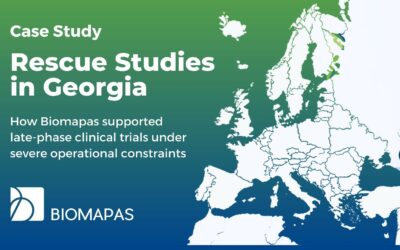
Case Study: Specialised Rescue Studies in Georgia
Discover how we successfully supported late‑phase clinical trials in Georgia by overcoming operational constraints, accelerating study start‑up, and restoring delivery confidence in complex research environments. This case study highlights three real‑world success...

Biomapas Insights: From Hope to Global Impact – How Elpida Accelerated Gene Therapy for Rare Diseases
In this Biomapas Insights episode, Martijn van de Leur, Chief Commercial Officer, speaks with Terry Pirovolakis, CEO of Elpida Therapeutics, the organisation that grew out of the CureSPG50 advocacy movement. Together, they explore how a parent-led mission to help...

Biomapas Insights: Selecting the Right CRO at the right time – What Biotechs Need to Know
Expert insights on timing, selection criteria, and early-phase clinical trial strategy for choosing the right CRO in biotech development.

Running Pan‑European Multi‑Regional Trials with Flexible FSP Models
Discover how flexible FSP models help sponsors run multi-country clinical trials across Europe with greater control, speed, and regional alignment.

Enhancing Patient Recruitment in Niche Markets Through Clinical Trial Outsourcing
Explore clinical trial outsourcing and its role in overcoming recruitment challenges in clinical research for small biotech companies.
Site Startup Services in Clinical Trials: Leveraging Local Expertise
Learn how integrating site startup services within a flexible FSP model accelerates activation in CIS and CEE, reduces contract cycles, and improves predictability from first submission to first patient in.